


The Automation Trap
We use cookies to understand how you use this site and improve your experience.
Every conference, every vendor deck says the same thing. AI can do what your people do, faster and cheaper. Companies listened.
IBM announced it would pause hiring for 7,800 roles. AI could handle the work. CNET replaced its writers with AI. BuzzFeed did the same. A mental health helpline replaced its counselors with a chatbot.
Each one started with the same calculation: the AI handles the task, so the person doing the task is overhead.
CNET's AI articles came back riddled with errors — facts wrong, sources fabricated. The writers they'd cut didn't just write. They verified. They knew what a reader needed to trust a sentence. The AI produced sentences. It didn't know which ones mattered.
The helpline chatbot gave harmful advice to people in crisis. The counselors didn't just answer questions. They listened. They read the pause between words. They knew when someone needed a human voice, not an answer.
IBM quietly kept hiring for the same roles it said AI could cover.
The AI did exactly what it was told. In every case, nobody was left who knew what to tell it.
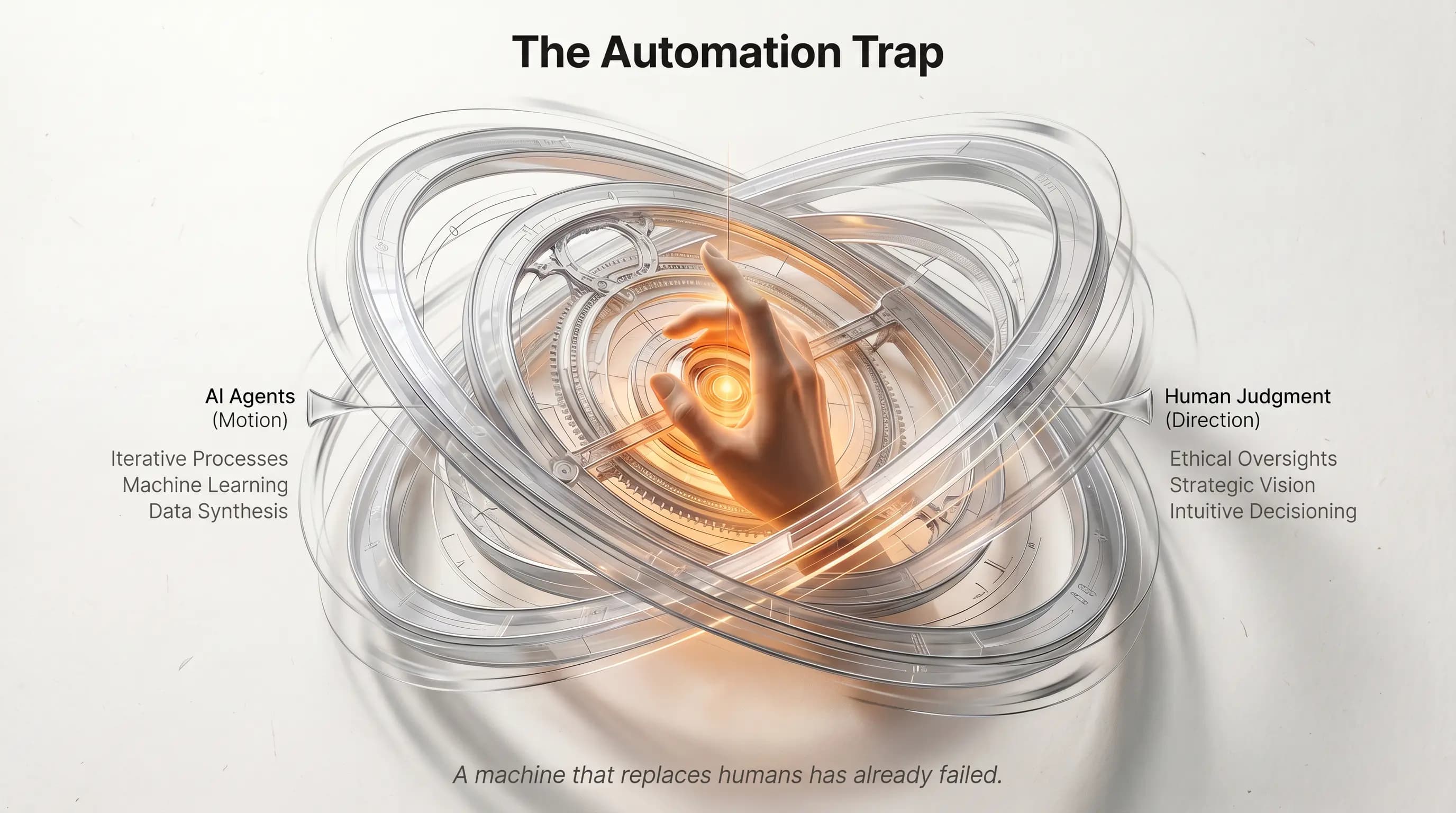
The technology works. AI is a powerful tool — for volume, speed, consistency. But a tool without someone at the helm is motion without direction.
The automation trap isn't the software. It's the belief that because a machine can perform the task, you no longer need the person who understood why the task mattered.
Companies are posting new listings now. Higher salaries. Same work. But the judgment — knowing when to verify, when to listen, when a situation needs a person and not a process — that doesn't restart with a new hire.
People aren't overhead. They're the reason any of it works. And a machine that replaces them has already failed.
Loading comments…