



The Chinese Room Has a New Tenant
- paperJohn Searle (1980). Minds, Brains, and Programs (Stanford Encyclopedia of Philosophy entry on the Chinese Room argument)
We use cookies to understand how you use this site and improve your experience.
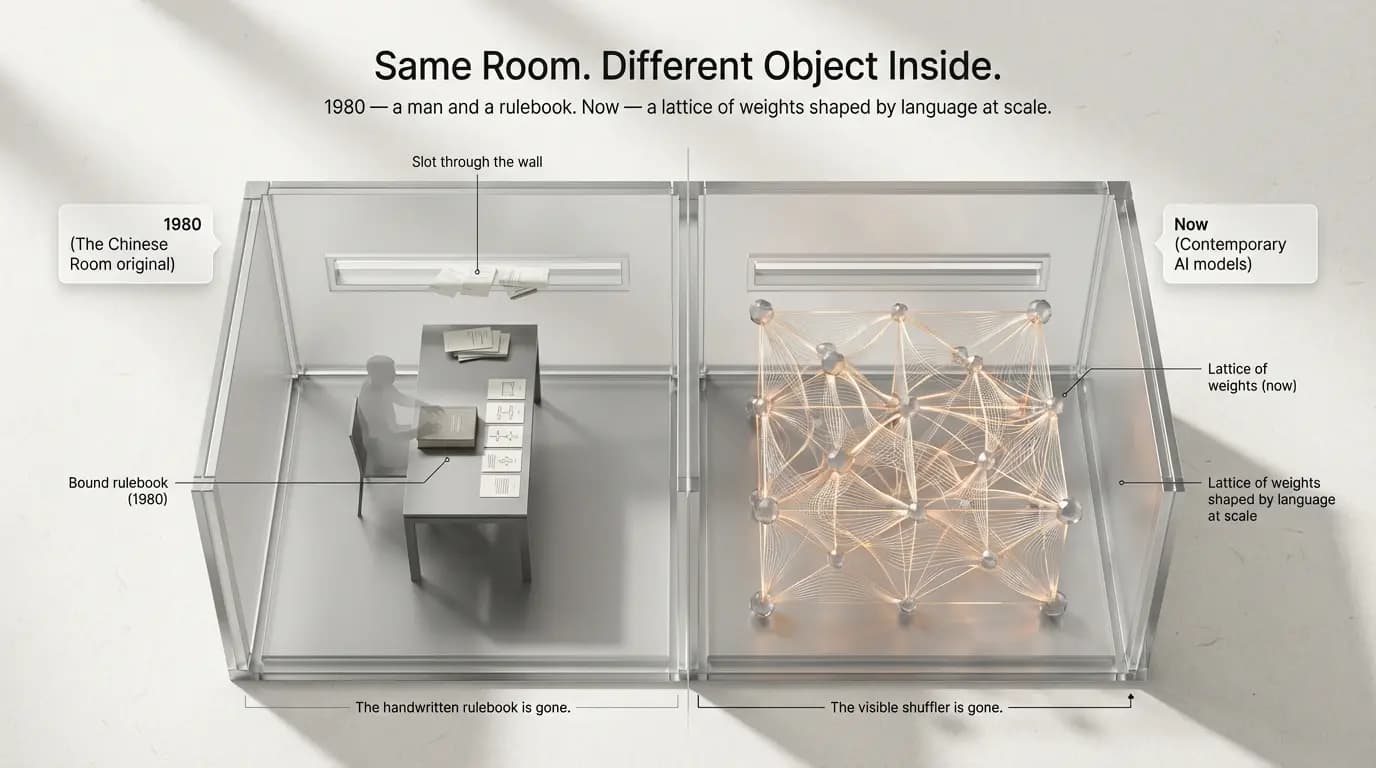
Picture a small closed room. There is a slot in the wall. Slips of paper come through, one at a time, with Chinese characters on them. The person inside does not read Chinese. He has a thick book in English. He looks up the shapes, finds the matching shapes, writes them on a fresh slip, pushes it back through the slot. Outside, the responses look flawless. Inside, nobody understands a word.
That is John Searle, 1980. A philosopher. The room is a thought experiment from a paper called Minds, Brains, and Programs, published in Behavioral and Brain Sciences in 1980. He built it to make one careful point. Machines can shuffle symbols. Shuffling isn't thinking. The book has no idea what it is saying. Neither does the person. Fluent on the outside. Empty on the inside.
For forty-six years, people argued over the room. Some said it proved machines could only simulate understanding. Others said Searle was looking in the wrong place — not at the man, but at the system. The Systems Reply moved the question one level up: nobody asked whether the man understood Chinese; the question was whether the whole arrangement — man, book, slot, slips — understood. Searle answered that one too. Memorize the book, walk out of the room, do the lookup in your head. The man is now the system. He still doesn't understand a word.
That answer about the original room still holds. Symbol manipulation alone doesn't get you to meaning. No one in there understands Chinese.
The argument earned its longevity. Before any update is owed to it, the original load-bearing claim should be honored on its own terms.
Not the kind Searle was imagining. He was picturing a person with a rulebook. What we actually built is something else.
Billions of tiny numbers, called weights. Each one shaped during training. Not the whole written record, but enough of it to matter. Books, articles, posts, comments, code, scraped web pages, curated corpora. Vast traces of human language, compressed into weights.
The handwritten rulebook is gone. The visible shuffler is gone. What remains is stranger: a distributed system of weights shaped by language at scale.
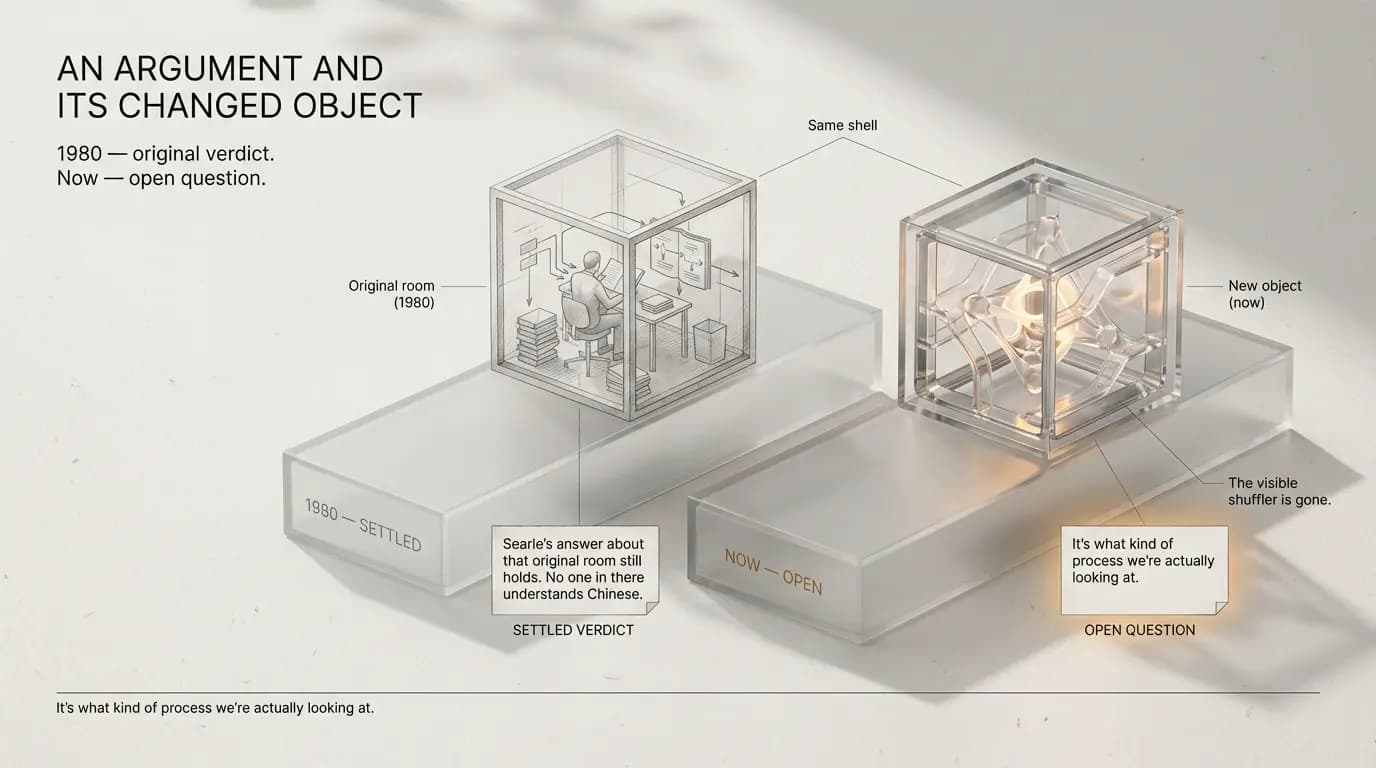
This is the part Searle could not have seen at this scale. The original argument treated the symbols inside the room as inert. Just shapes. Stand-ins for nothing. That assumption was load-bearing. Without it, the room is no longer the same thought experiment — it is a different one.
Take the assumption seriously. Inside Searle's original room, the marks on the slips of paper carried no internal pull on each other. Two characters next to each other meant nothing more than two characters next to each other. The book mapped shapes to shapes. The man pushed paper through a slot. The interior of the room was, by design, semantically empty. That is what made the thought experiment work.
But language is not inert. The order of words. The way they sit next to each other. The way they pull and push on each other. That structure carries the shape of how the people who wrote them think. Not all of it. Not the inner experience. But the patterns — what tends to follow what, what holds emphasis, what hedges, what commits, what relates to what — those patterns sit in the language itself, not only in the heads that produced it.
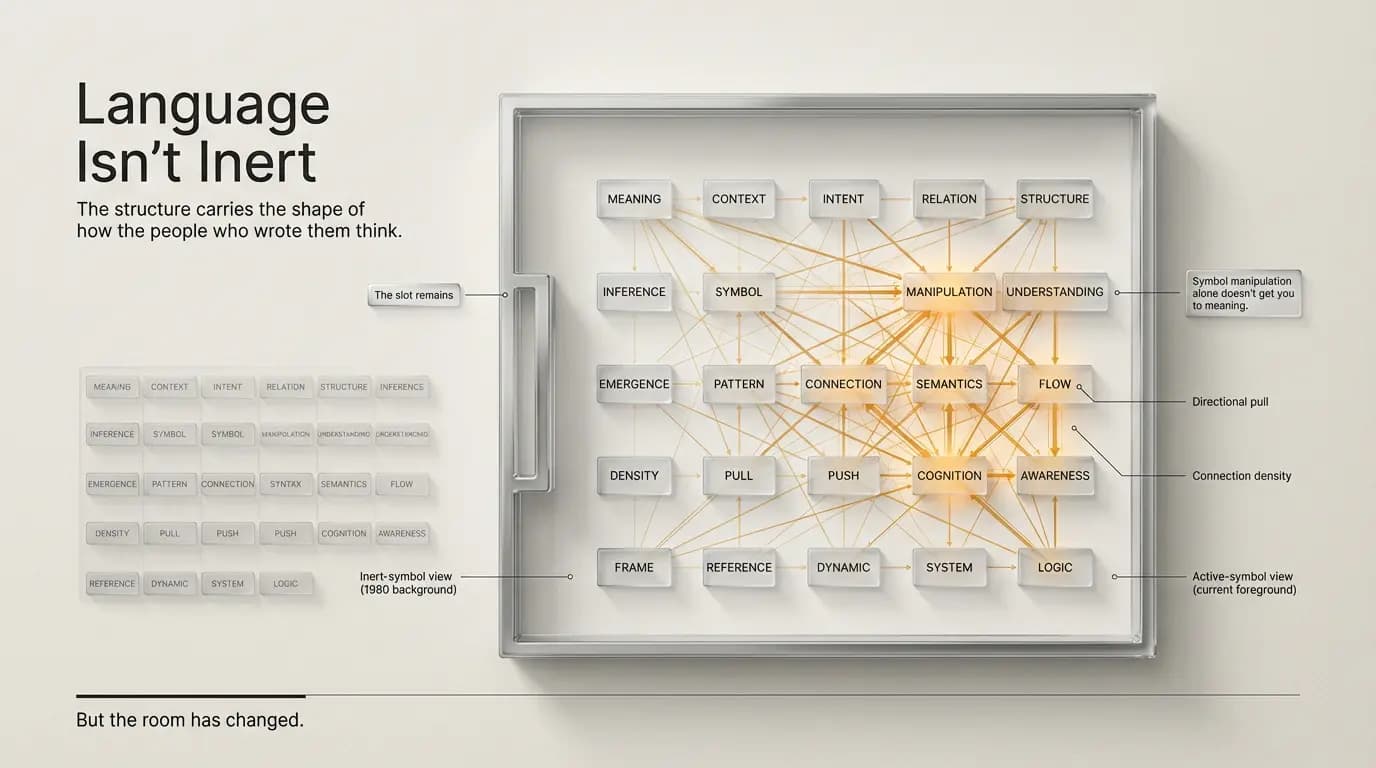
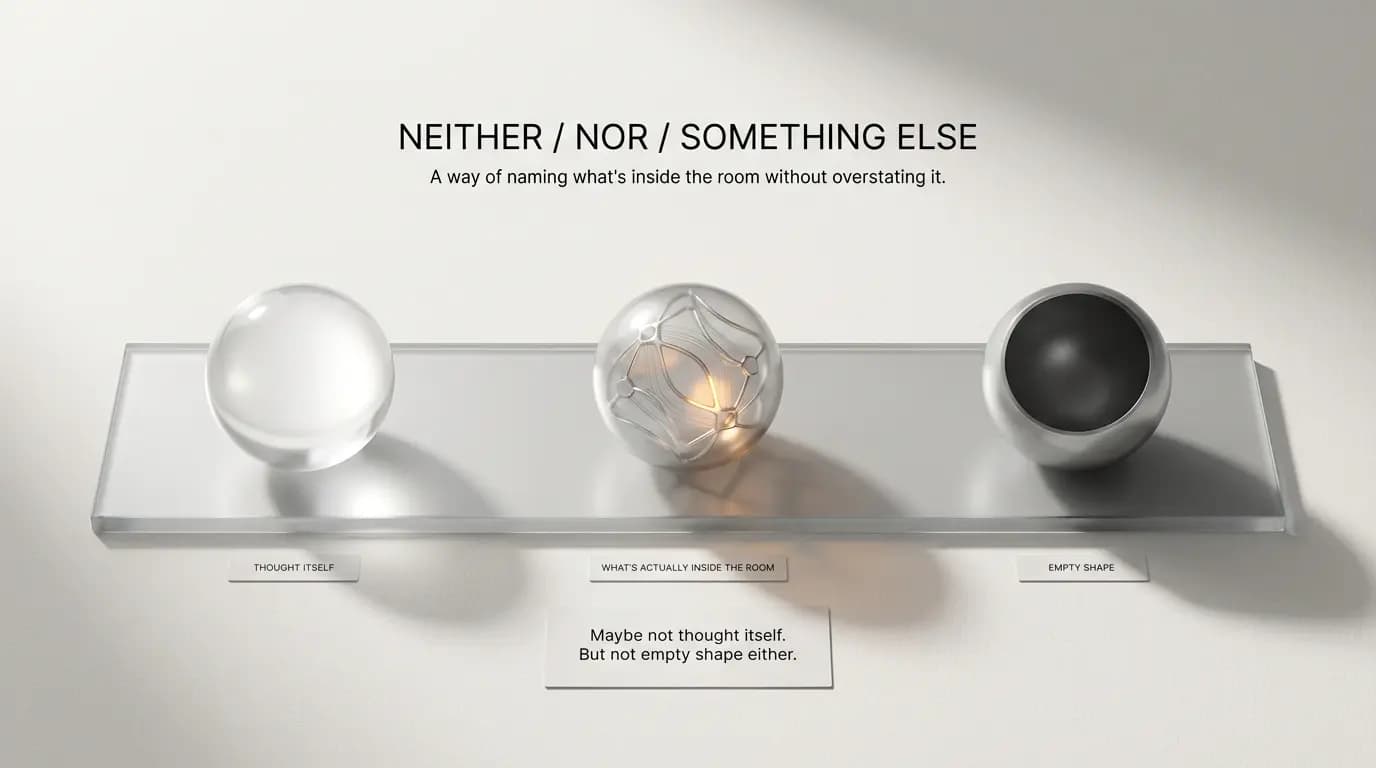
When a system absorbs that structure at scale, it absorbs more than isolated symbols. It absorbs statistical traces of how humans use meaning, relation, emphasis, uncertainty, and inference. Maybe not thought itself. But not empty shape either.
This is the category I have been naming for a year and a half. Most of what people call AI today is better described as elastic automation — automation flexible enough to negotiate language, and now flexible enough to negotiate outcomes. The Chinese Room argument was built against a rigid symbol-shuffling machine. The thing currently inside the room is not rigid. It does not shuffle. It interpolates across a distribution of human-produced text. That is a different operation, sitting on a different substrate, with different failure modes.
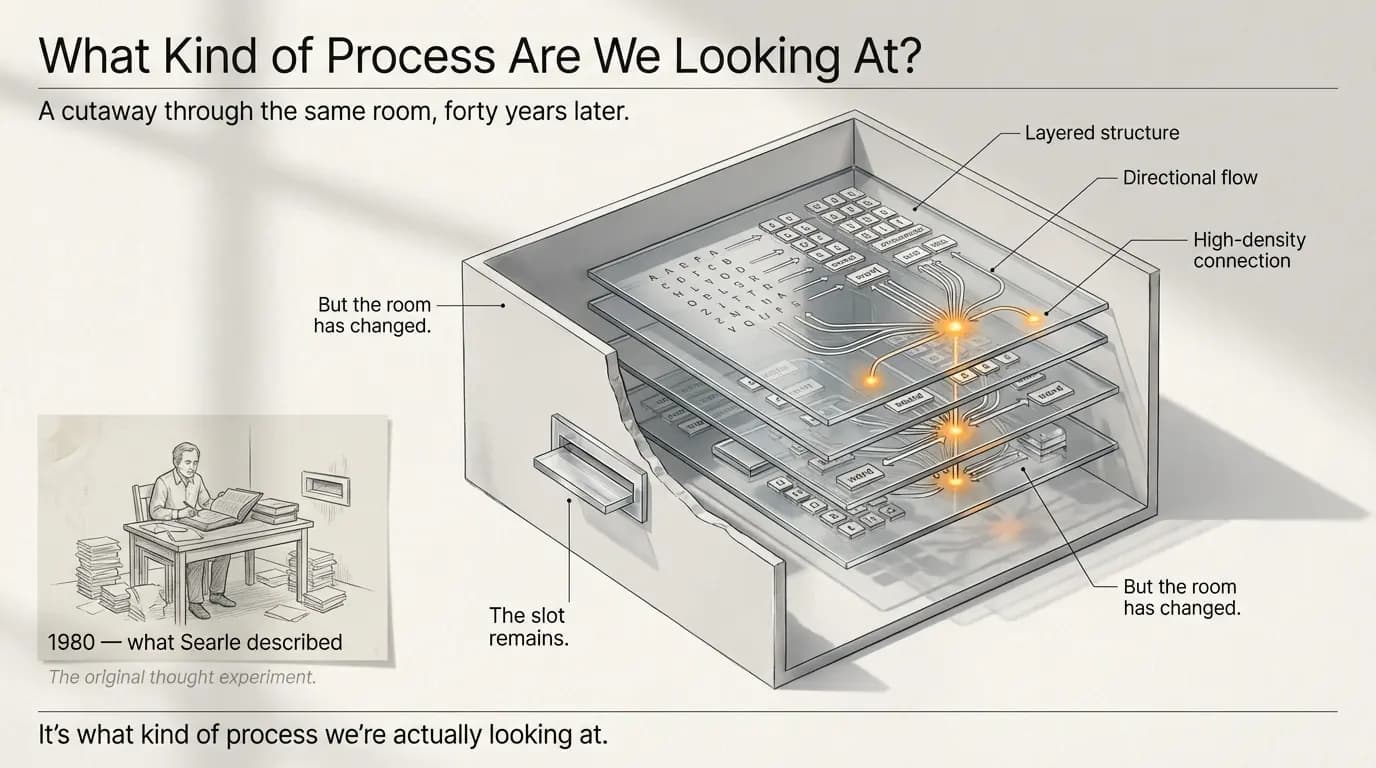
This isn't a victory over Searle. We still don't know if what's inside understands anything. His suspicion still has force. His verdict about his original room still holds.
But the room has changed. The question now isn't only whether it understands. It's what kind of process we're actually looking at.
The popular version of the Chinese Room has hardened into shorthand: Searle proved machines can't think, so they can't. The original argument is more careful than that, and the test case it was applied to is forty-six years old. Rerunning the argument against current systems without examining whether the assumptions still apply is not respect for the argument. It is the opposite.
A system whose interior structure is language at scale, weighted is not the same object as a man with a lookup book. The verdict on the lookup book still stands. The verdict on the new object is not yet written. That is the honest place to leave the question.
Loading comments…